
What Are the Best HiFi Audiophile In-Ear Headphones?
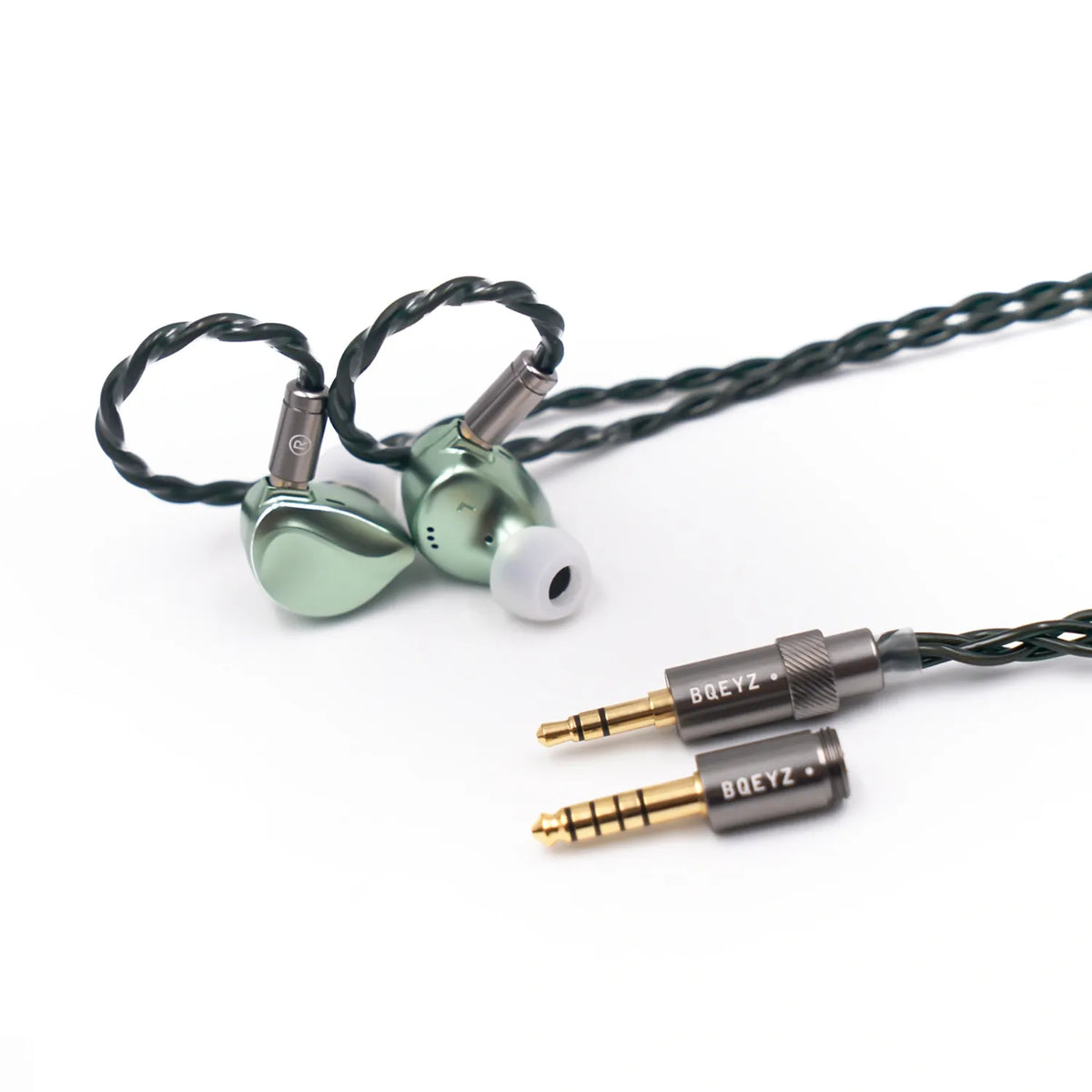
If you’ve ever wondered “What are the best HiFi audiophile headphones?”, especially in the in-ear domain, you’re in the right place. In this article, we’ll break things down step by step: what in ear fidelity means, what makes a truly good in ear monitor earphone, how to choose wisely, and where our BQEYZ offerings (like BQEYZ Wind, BQEYZ Winter Ultra, and the BQEYZ LIN adapter) shine.
1. Introduction: Understanding “In-Ear Fidelity” & In-Ear Monitors
When people talk about in-ear fidelity, they usually refer to high-quality in ear monitors that deliver audiophile-grade sound in a compact, portable form. In simpler words: these are in-ear systems that aim to bring you deep, precise, nuanced sound — all within a shell that sits inside your ear canal.
Why do so many audio lovers lean toward in-ear monitors instead of traditional over-ear or on-ear headphones? Here are some of the key advantages:
-
Isolation & Noise Rejection: A well-fitting IEM can create a seal that blocks out much of the ambient noise, letting you hear details without cranking volume.
-
Portability & Convenience: They’re light, small, and easy to carry — perfect for travel, commuting, or studio setups.
-
Precision & Near-Field Listening: Because the driver is so close to your eardrum, you can get tight imaging and detail resolution.
-
Stage / Monitoring Use: In live performance settings, many professionals use IEMs so they can hear the mix clearly without huge monitors blasting on stage.
However, not all in-ear monitors are created equal. That’s why it pays to know what to look for in a model that delivers top-tier audio performance in this form factor.
2. What Makes a “Best HiFi In-Ear Headphone”? Criteria & Trade-offs
If someone asks, “What are the best HiFi audiophile headphones?”, there’s no one-size-fits-all answer — especially when we talk about in-ear monitors. But there are key criteria you should look for. Let’s go through each:
2.1 Sound Signature & Tonal Balance
-
A “best” model will typically offer a balanced, cohesive sound — meaning no overly fat bass drowning out mids or shrill highs cutting your ears.
-
Some users prefer a bass-tilted tuning (for EDM, hip-hop, bass-heavy music), others want neutral or “reference” tuning for mixing or critical listening.
-
The ability to control or adjust tuning (via filters, swappable tips, equalizer) is also a plus.
2.2 Driver Technology & Hybrid Designs
-
Pure dynamic drivers often deliver strong, lively low-end, but might lack micro-detail in highs.
-
Balanced armature / multi-armature drivers can yield very fine detail, but sometimes lack body or slam in bass.
-
Hybrid designs (dynamic + balanced armature or other types) strive to combine the best of both worlds — strong low-end with crisp detail up top.
-
There are more exotic designs (planar, electrostatic, bone conduction) — each with trade-offs in size, drive demands, and cost.
2.3 Impedance, Sensitivity & Matching with Source
-
A low-sensitivity IEM might require a powerful amplifier to drive well.
-
Mismatch between IEM impedance and your source (phone, DAP, DAC + amp) can lead to poor dynamics or distortion.
-
The “best” IEM will behave well across common sources, or at least match well with your equipment.
2.4 Cable, Connector & Upgrade Potential
-
In many high-end in-ear monitor systems, cable quality and connector design matter — better cable = less signal loss and noise.
-
If the IEM supports interchangeable cables (e.g. 2-pin, MMCX, or custom), that gives room for future upgrades.
-
Connectors like 3.5 mm, 4.4 mm balanced, or even Type-C adapters (like the BQEYZ LIN) expand compatibility.
2.5 Physical Fit, Build Quality & Comfort
-
A shell must be ergonomic and not cause fatigue over extended listening.
-
Materials: resin, metal, acrylic, or composite — each has weight and acoustic trade-offs.
-
Good sealing (with multiple eartip options) ensures optimal isolation and low-end performance.
-
Durability and craftsmanship are non-negligible for long-term satisfaction.
2.6 Value, Brand & Support
-
Many extremely expensive models exist, but “best” is often the one that gives excellent performance per dollar.
-
Brand reputation, warranty support, parts availability are part of what makes a model reliable in the long run.
When all of these elements come together, you approach what listeners mean by “best” in in ear fidelity.
3. How to Choose the Right In-Ear Monitor for You
Given the criteria above, how do you make a good personal choice — not just what’s technically “best” but what fits your use case? Let’s walk through a decision path:
3.1 Know Your Listening Preference & Music Genre
-
If you’re a bass lover (hip-hop, EDM, pop), you might lean toward IEMs with a stronger low-end signature.
-
If you prefer classical, jazz, acoustic or vocal-forward music, you’ll favor models that highlight mids or treble clarity.
-
If you mix genres, then a more balanced model is safer.
3.2 Understand Your Usage Scenarios
-
Commuting / portable: noise isolation, portability, ease of use matter.
-
Studio / mixing / monitoring: you might prioritize more neutral, flat tuning for reference use.
-
Live performance / stage use: you also need reliable isolation, dynamic range, and robustness.
3.3 Source Equipment Matching
-
What’s your source? Your phone’s headphone jack? A DAP? A USB DAC + portable amp?
-
If your source is weak, avoid high-impedance, low-sensitivity IEMs unless you're pairing with a headphone amp.
-
Think ahead: if you might upgrade to a DAC + amp later, pick something scalable.
3.4 Cable & Connector Choices
-
A model with support for different connectors or balanced cables gives you flexibility.
-
This is where something like the BQEYZ LIN (3.5mm or 4.4mm to Type-C) becomes useful: it ensures your IEM can adapt to evolving devices.
3.5 Ear Tip & Fit Testing
-
Even the best IEM can sound dull if the seal is poor — try multiple eartips (foam, silicone, wide bore, narrow).
-
Always try the IEM for at least 15–30 minutes in real listening conditions before judging.
3.6 Price vs. Performance & Diminishing Returns
-
Often, beyond a certain price, gains are incremental.
-
Choose the model that gives you the best balanced experience for your budget — that might well be a “mid-tier” but well-tuned IEM.
3.7 Trial & Comparison
-
If possible, borrow or audition two or three candidates back to back.
-
Use reference tracks you know well (covering bass, vocal, cymbals, etc.).
-
Listen at moderate volumes; extreme high volumes mask tonal differences.
4. BQEYZ In-Ear Monitor Models & Why They Shine
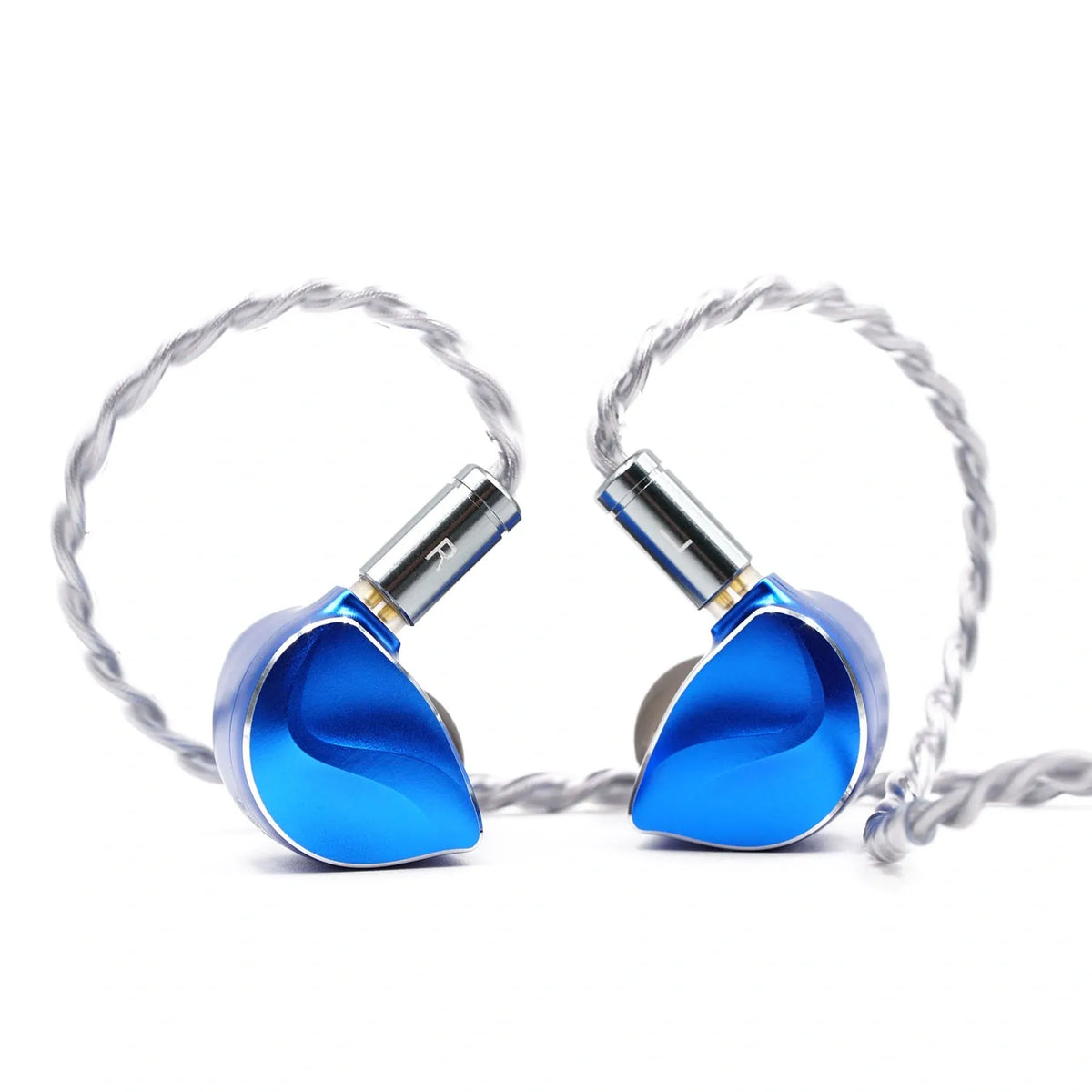
Here are the BQEYZ in-ear monitors we recommend.
Our recommended models:
4.1 Brand Positioning: BQEYZ & In-Ear Audiophile Focus
BQEYZ’s mission is to deliver high-fidelity in-ear monitors and make in ear fidelity accessible. We specialize in wired, high-performance IEMs that balance precision, tonal quality, and user-friendly design.
Our product lineup aims to satisfy both vocal lovers and more balanced listeners, while also providing flexible connectivity via our cable and adapter solutions (like the BQEYZ LIN).
4.2 BQEYZ Wind – Natural Vocals & a Wide Soundstage
BQEYZ Wind pairs a 10mm dynamic driver with a 10mm bone-conduction driver for natural, expressive vocals and a wide, open soundstage. If vocals are at the heart of the music you love, this model is a strong choice.
-
It’s well suited for vocal-led music, jazz, acoustic and live recordings.
-
The bone-conduction driver adds depth and texture without overpowering the mids.
4.3 BQEYZ Winter Ultra – Balanced & Smoother Across the Spectrum
BQEYZ Winter Ultra takes a more balanced tuning direction. Its strengths lie in smoother transitions between lows, mids, and highs — less “bass thump” but more cohesion.
-
Vocals, guitars, acoustic instruments tend to sound more natural.
-
For users who want one IEM that covers multiple genres without fatigue, Winter Ultra is a safer bet.
-
Winter Ultra is our reference all-rounder model.
4.4 BQEYZ LIN – Cable / Adapter Adaptability
While not a sound source itself, the BQEYZ LIN (3.5mm or 4.4mm to Type-C) plays a crucial role in the user experience of IEMs.
-
It ensures your in-ear monitors stay future-proof as devices phase out 3.5 mm jacks.
-
Good cable / adapter design minimizes signal loss or impedance mismatch, which is important for in ear fidelity.
4.5 BQEYZ Vesper – Bone Conduction Hybrid IEM
BQEYZ Vesper is our newest bone conduction hybrid IEM. It combines a 10.8mm dual-cavity dynamic driver with a 4μm diaphragm and a direct-drive PZT bone conduction driver, and comes with a 3.5mm or 4.4mm plug. Learn more in our guide to bone conduction IEMs, or compare hybrid IEM vs dynamic IEM.
4.6 Comparative Positioning & Suggestions
Here’s a quick comparison:
| Model | Sound Signature | Best Use / Genre Focus | Notes |
|---|---|---|---|
| Wind | Natural vocals / wide soundstage | Vocals, jazz, acoustic, live recordings | Bone conduction adds depth and texture |
| Winter Ultra | Balanced / smooth | All-round listening, vocals, acoustic, varied genre | Less fatiguing, more neutral choice |
| LIN (adapter) | — | Cable compatibility | Ensures your IEMs remain versatile across devices |
Wind is our vocal-focused flagship and Winter Ultra our balanced flagship, with LIN for flexible connectivity.
5. Usage Tips, Maintenance & Listening Advice (so your IEM stays and sounds great)
Even the best in ear monitor earphone needs good treatment and smart use. Here are practical tips to ensure you get the most from your BQEYZ (or any) IEM.
5.1 Fit & Seal – The Foundation of Good Sound
-
Try multiple eartip materials (foam, silicone) and bore sizes.
-
Push the IEM in and twist slightly to ensure a tight seal — you should perceive bass enhancement and ambient noise drop.
-
If one side sounds hollow or bass-shy, it’s likely a seal issue, not the headphone’s fault.
5.2 Break-in / Burn-in Debate
-
Some users believe there is a “burn-in” period where sound matures slightly.
-
Whether or not it's real, give your IEMs 50–100 hours of moderate listening before making final judgment.
-
But don’t force loud volume; slow, steady use is safer.
5.3 Use Appropriate Output & Volume
-
Avoid driving extremely loud: prolonged exposure can damage both your ears and IEM drivers.
-
Because IEMs isolate so well, it’s easy to “turn up too much” — be mindful of safe volume levels.
-
If your source is weak, be cautious choosing very low-sensitivity IEMs that demand a lot of power.
5.4 Cable Care & Upgrade Path
-
Always unplug by holding the plug, not pulling the cord.
-
When coiling cables, use gentle loops to avoid kinks.
-
If your model supports cable upgrades, try experimenting with better cables — but avoid expecting miracles; synergy is key.
5.5 Cleaning & Maintenance
-
Regularly clean earwax / debris from nozzles (use a gentle brush or tool).
-
Keep them in a protective case to avoid physical damage.
-
If connectors get dusty or oxidized (especially in adapters like LIN), clean contacts with a soft, non-abrasive material.
5.6 Listening Strategy & Source Matching
-
Use high-quality audio files (lossless / hi-res) to truly assess sound.
-
Compare your IEMs with a known reference track/recording.
-
Try different source gear — e.g. phone, portable DAC, desktop DAC/amp — to hear how your IEM behaves in different setups.
5.7 Common Pitfalls & How to Avoid Them
-
Overemphasis on specs: Numbers (ohm, sensitivity) only tell part of the story.
-
Too much volume: Because of isolation, you might feel “less loud” and push too far. Be cautious.
-
Ignoring the cable/adapter: A bad cable or mismatched adapter (like a cheap 3.5mm-to-Type-C) can degrade sound noticeably.
-
Assuming one model suits all: Your listening habit matters — don’t force yourself into a “universal” IEM if your ears or preferences differ.
Conclusion & Final Thoughts
So, what are the best HiFi audiophile in-ear headphones? The honest answer is: it depends — on your music taste, your source, your ear shape, and your usage scenario.
You can approach “best” by seeing which product best balances:
-
Tonal preference (bass, neutral, warm, bright)
-
Source compatibility & drive demands
-
Comfort, fit & seal
-
Cable / connector flexibility
-
Value for money + support
In that light, BQEYZ’s lineup offers two strong pillars:
-
BQEYZ Wind — for those who love natural, expressive vocals and a wide, open soundstage.
-
BQEYZ Winter Ultra — for listeners seeking smoother, more balanced presentation across the spectrum.
-
Add the BQEYZ LIN adapter for a future-proof, flexible way to connect.
Looking for something newer? Try the BQEYZ Vesper bone conduction hybrid IEM, or browse all BQEYZ in-ear monitors.
Share:
Unleashing the Power of Hi-Fi Audio: A Comprehensive Guide to In-Ear Monitors
Are Audiophile Headphones Worth It? | IEM Ear Monitor Guide by BQEYZ