
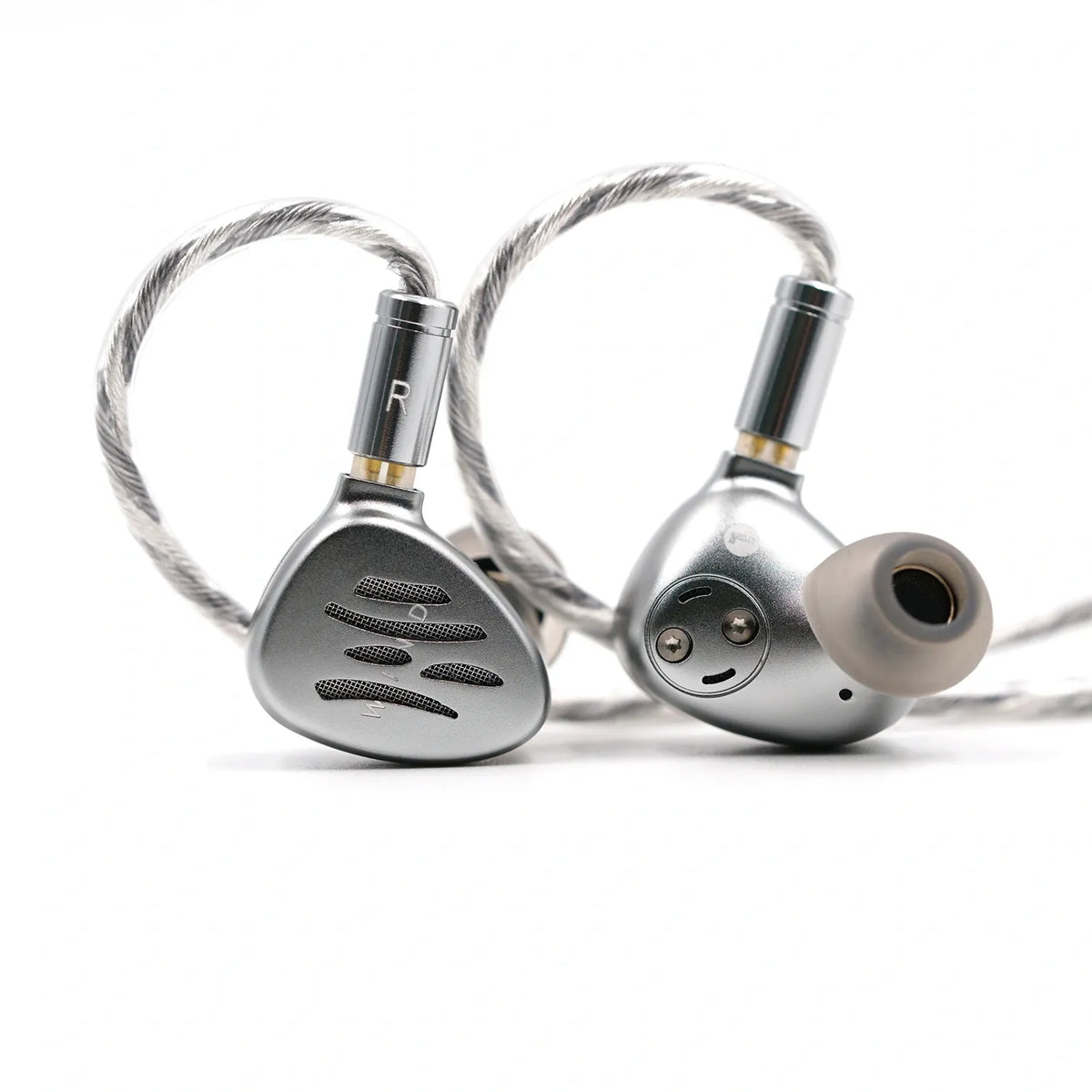
Introduction: What Is a Dynamic Driver?
When exploring headphones and earphones, one of the most common terms you will encounter is the dynamic driver. So, what is a dynamic driver in the context of audio equipment? A dynamic driver is a small speaker unit inside your headphones that uses a diaphragm, a voice coil, and a magnet to produce sound. This technology is similar to how traditional loudspeakers work, but it is miniaturized to fit inside earphones or in-ear monitors (IEMs).
Because of its simplicity and efficiency, dynamic driver headphones have become the most widely used type in consumer and professional audio gear. They are valued for their ability to reproduce strong bass, maintain natural sound, and offer a good balance between cost and performance.
At BQEYZ, every one of our wired in-ear monitors is built around a dynamic driver — from the single 12mm driver in the BQ10 to hybrid designs that pair a dynamic driver with bone conduction, micro planar or air-assisted technology.
How Dynamic Drivers Work: Technology and Sound Principles
A dynamic driver relies on three main components:
-
A diaphragm (the thin membrane that vibrates)
-
A voice coil (which carries the electrical audio signal)
-
A magnet (which creates the magnetic field)
When an audio signal passes through the coil, it interacts with the magnet, causing the diaphragm to move. This movement pushes and pulls air, creating the sound waves you hear.
The dynamic driver design is powerful in producing impactful bass because the diaphragm can move more air compared to other driver technologies. At the same time, advances in diaphragm materials (such as PET, PU and PEEK composites) let manufacturers fine-tune mid and high frequencies for more detail.
For instance, a dynamic driver IEM with a large diaphragm can produce deep, resonant bass, making it an excellent choice for genres like EDM, hip-hop, or cinematic scores. Smaller or specially engineered diaphragms, on the other hand, are tuned for vocal clarity and balance.
Dual Driver vs Dynamic Driver: Key Differences
One of the most common debates among audiophiles is dual driver vs dynamic driver. Let’s break it down:
Single Dynamic Driver (1DD)
A single dynamic driver IEM uses one diaphragm to handle the entire frequency range — often written as "1DD" (read what 1DD means). Its strengths include:
-
Simplicity in design
-
Natural and coherent sound
-
Strong bass response
-
Affordable pricing
However, because one driver is responsible for lows, mids, and highs, there may be trade-offs in clarity and separation compared to multi-driver setups. The BQEYZ BQ10 is a good example of a well-tuned single dynamic driver IEM: a 12mm driver with a PET diaphragm for warm, natural sound.
Dual Dynamic Driver
A dual dynamic driver earphone uses two separate diaphragms. Typically, one driver focuses on the bass, while the other handles mids and highs. This allows for:
-
Better frequency separation
-
Improved clarity and detail
-
Wider soundstage
When comparing dual driver vs dynamic driver, dual driver earphones are often better at handling complex music tracks, but they can be more expensive and harder to engineer properly. The BQEYZ NI uses a dual dynamic driver design for refined highs and precise sound positioning.
Dual-Cavity and Dual-Magnet Dynamic Drivers
Another advancement is the dual-cavity or dual magnetic dynamic driver, which uses an improved chamber or magnet design for better efficiency and control. This results in:
-
Higher sensitivity
-
More accurate sound reproduction
-
Enhanced dynamics
The BQEYZ Winter2 and Winter Ultra both use dual-cavity dynamic drivers, paired with bone-conduction drivers for extra depth and detail.
Hybrid IEMs: Dynamic Drivers Plus Another Technology
Many modern IEMs keep a dynamic driver for natural bass and add a second technology for mids and highs. At BQEYZ, our hybrid IEMs include:
-
Frost: a 10mm dual-cavity dynamic driver + micro planar transducer for crisp, airy detail
-
Cloud: a 10mm dynamic driver + air-assisted diaphragm for clear, vocal-forward sound
-
Wind: a 10mm dynamic driver + 10mm bone-conduction driver for natural vocals and a wide soundstage
Exploring Dual Dynamic Driver Earphones: Benefits and Considerations
The rise of dual dynamic driver earphones and dual dynamic driver earbuds has been significant in recent years. Here’s why many users are drawn to them:
Benefits
-
Frequency Separation: Dedicated drivers for lows and highs reduce distortion.
-
Enhanced Detail: More clarity in vocals, instruments, and high-frequency sounds.
-
Immersive Soundstage: Creates a wider, more three-dimensional sound.
-
Versatility: Suitable for a variety of genres, from classical to electronic music.
Considerations
-
Price: More complex design usually means higher cost.
-
Tuning: If not engineered properly, dual drivers may sound unbalanced.
-
Size: The additional driver can make earphones slightly larger.
How to Choose and Use Dynamic Driver Headphones
If you are considering dynamic driver headphones, here are some practical tips:
Choosing the Right Driver Setup
-
Single Dynamic Driver: Best for budget-conscious users or those who prefer a simple, coherent sound signature (for example the BQ10).
-
Dual Dynamic Driver: Great for listeners who want clarity, detail, and precise positioning (for example the NI).
-
Hybrid: Ideal for users who want a dynamic driver's natural bass plus extra detail from planar, bone-conduction or air-assisted technology (see our hybrid IEMs).
Match with Your Listening Habits
-
Music Lovers: If you enjoy bass-rich genres, a dynamic driver IEM is a perfect fit.
-
Gamers: Look for in-ear monitors with dual drivers or hybrids for positional accuracy and detail.
-
Professionals: Musicians and sound engineers may benefit from dual or hybrid setups for better monitoring.
Usage and Maintenance
-
Use a good-quality music player or DAC to get the best out of your earphones.
-
Store earphones in a protective case to extend lifespan.
-
Clean ear tips regularly for hygiene and consistent sound.
FAQ: Dynamic Driver Headphones
Are dynamic drivers better than balanced armature drivers?
Neither is better in every way. Dynamic drivers usually give fuller, more natural bass, while balanced armature drivers are small and precise in the mids and highs. Many IEMs combine a dynamic driver with another technology to get both.
What does 1DD mean?
1DD means one dynamic driver: a single dynamic driver handles the whole frequency range. Learn more about 1DD and BA DD.
Is a bigger dynamic driver always better?
Not always. A larger driver can move more air for deeper bass, but tuning, diaphragm material and the chamber design matter just as much for clarity and detail.
Do dynamic driver headphones need a DAC or amplifier?
Usually not. Most dynamic driver IEMs are efficient and sound great from a phone or laptop. A portable DAC can add extra detail and volume headroom (see our portable DAC & adapters).
Conclusion: Why Dynamic Drivers Still Dominate the Market
The question what is a dynamic driver highlights the foundation of modern headphone design. Whether in a simple single-driver earphone or an advanced dual dynamic driver or hybrid IEM, this technology continues to dominate because of its natural sound, impactful bass, and cost efficiency.
While dual driver vs dynamic driver comparisons show advantages to both, your choice should depend on your listening preferences. Single drivers offer simplicity and warmth, while dual drivers and hybrids provide more separation and detail.
Explore every BQEYZ dynamic driver IEM, from the BQ10 to the flagship Winter2, in our IEM collection.
Share:
BQEYZ HiFi IEM Review: Wired Earphones with Detachable Cable
Are Audiophile Earphones Worth It? BQEYZ Wired IEM Review