
If you're shopping for better sound, you've probably seen two words everywhere: IEMs and earbuds. They both sit in your ears, so what's the actual difference, and which one is right for you? Here's a simple, honest guide.
What is an IEM?
IEM stands for in-ear monitor. IEMs were first made for musicians on stage, who needed to hear themselves clearly over a loud band and crowd. An IEM sits deeper in your ear canal and uses a silicone or foam ear tip to create a seal, a bit like a small earplug that plays music.
That seal does two important things: it blocks outside noise, and it keeps the bass and detail inside your ear instead of leaking out.
What are earbuds?
"Earbuds" is a broader, everyday word. It usually means small earphones that rest at the entrance of the ear, like the classic flat earphones that came with older phones, or most casual wireless earbuds. Many sit loosely and don't fully seal the ear.
IEM vs earbuds: the key differences
| IEMs | Typical earbuds | |
|---|---|---|
| Fit | Sit inside the ear canal with a seal | Rest at the opening of the ear |
| Noise isolation | High, blocks a lot of outside noise | Low to medium |
| Bass and detail | Fuller bass and more detail thanks to the seal | Often lighter bass |
| Drivers | Often one or more specialised drivers (dynamic, planar, bone conduction, balanced armature) | Usually a single small driver |
| Cables | Often detachable and upgradeable | Usually fixed, or wireless |
| Best for | Music lovers, gamers, musicians, commuting | Casual listening, calls |
Why IEMs usually sound better
1. The seal. Because an IEM seals your ear, you hear deeper bass and finer detail at a lower volume, which is also kinder to your hearing.
2. Better drivers. Many IEMs use more advanced driver designs. For example, the BQEYZ Frost pairs a dynamic driver with a micro planar transducer for crisp, airy detail, while the BQEYZ Winter2 adds a bone-conduction design for a fuller, more immersive sound.
3. Detachable cables. Most quality IEMs use standard connectors such as 0.78mm 2-pin, so if a cable wears out you simply replace it, or upgrade it, instead of buying a new pair.
Are IEMs comfortable?
Yes, once you find the right fit. The most important step is choosing the correct ear tip size. A good seal should feel snug but never painful. Most IEMs include several sizes, and you can also try different ear tips for comfort and sound.
Do IEMs work with my phone?
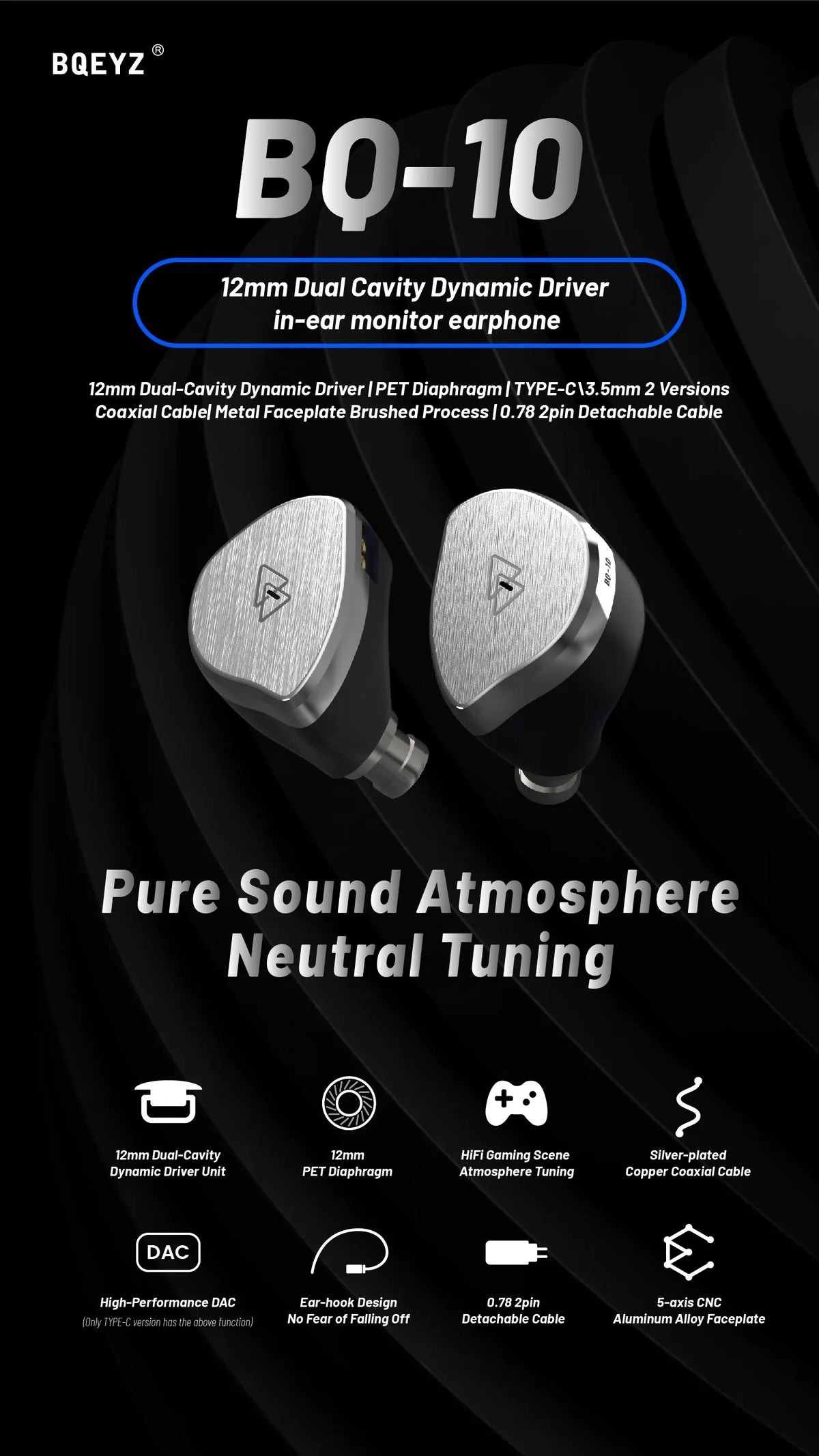
Most IEMs use a 3.5mm plug, and many offer 4.4mm balanced plugs too. If your phone has no headphone jack, choose a Type-C version (for example the BQEYZ BQ10) or add a small adapter such as the C30 mini DAC.
So which should you choose?
- Choose earbuds if you mainly want something light for calls and background listening.
- Choose IEMs if you care about sound quality, want to block outside noise, play games where positioning matters, or want earphones that last for years thanks to replaceable cables.
Where to start with IEMs
- First step into hi-fi: BQEYZ BQ10, warm and smooth with natural bass
- Gaming and music on a budget: BQEYZ NI
- Detail and planar sound: BQEYZ Frost
- Vocals and a wide soundstage: BQEYZ Wind
- The full flagship experience: BQEYZ Winter2
Not sure which one fits you? Compare every model side by side in our IEM collection.
Share:
Hybrid IEM vs Dynamic IEM: What Is the Difference?
Best IEMs for Gaming: Hear Every Footstep